Best Practices, Hidden Costs, and Vendor Selection Tactics for AMI Rollouts in Water Utilities
Vendors pitch AMI as a meter project. The utilities that succeed treat it as an enterprise IT, customer experience, and staffing project from day one.
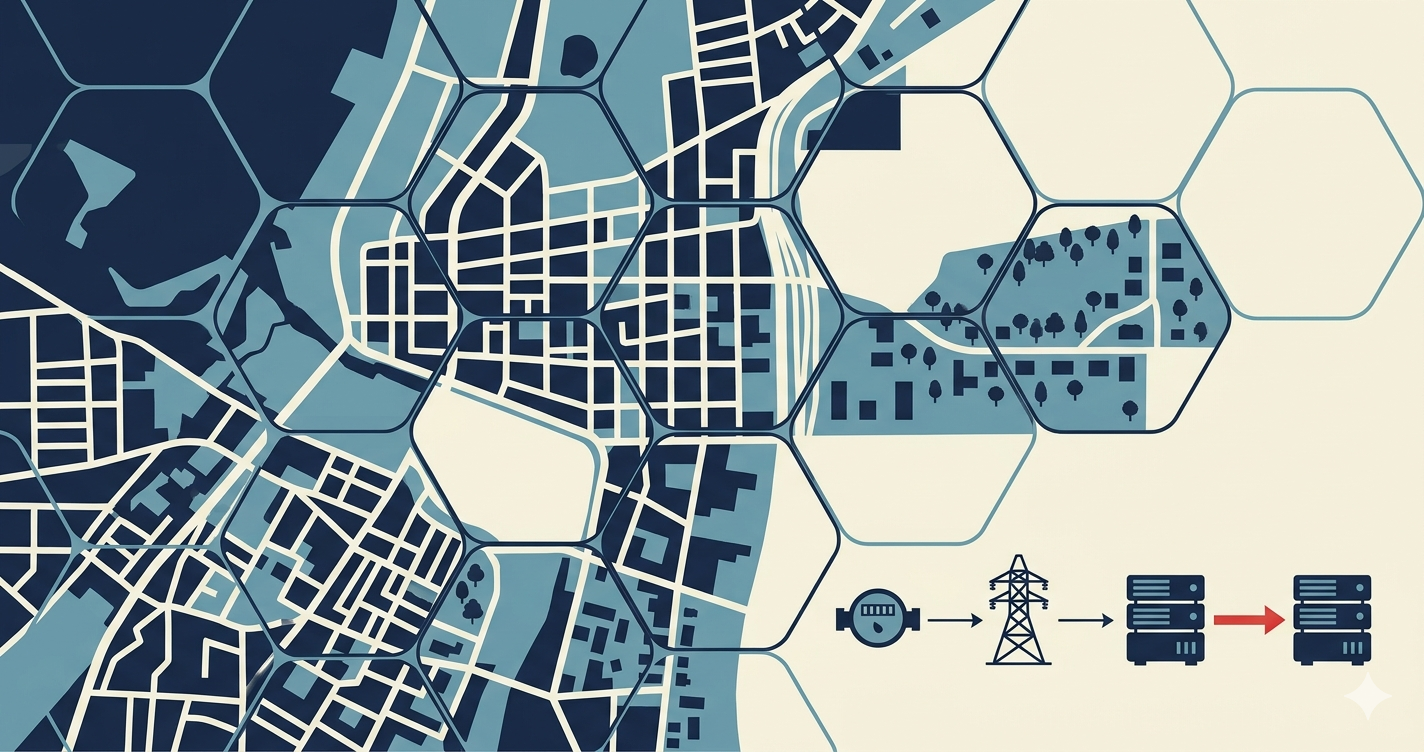

AMI is the only major infrastructure investment a water utility makes where the meters are the easy part (in theory!). Towers go up, meters get installed, the head-end starts pulling data, and somewhere between month nine and month eighteen of the rollout, the project hits a wall that nobody put in the RFP. The wall has a different shape at every utility, but the underlying problem is remarkably consistent. The bid scoped a hardware deployment. The actual work is an enterprise IT project, a customer experience overhaul, and a workforce redesign happening simultaneously, and the utility didn’t budget for any of those.
I have watched a half dozen of these rollouts up close, and the pattern repeats. The first year goes well. The vendor hits installation milestones. Read rates climb. The board hears positive updates. Then the system goes live for billing, and the trouble starts. Customer service queues lengthen, the CIS integration produces exceptions nobody on staff knows how to triage, and operators discover their meters were less accurate than anyone realized. The promised conservation savings, leak detection alerts, and theft reduction stay theoretical because nobody has the analytics capacity to act on the data. Two years in, the utility has installed a more expensive way to do the same thing it was doing before.
This piece is for the utilities that haven’t yet committed to a rollout and the technology vendors that sell into them. The cost and complexity of AMI sit in places the procurement document rarely captures.
The CIS integration is the project
The single most underestimated line item in any AMI rollout is the integration with the billing system. Every utility I have worked with has gone into procurement believing the CIS integration is a tractable, well-scoped piece of work that the AMI vendor and the CIS vendor will sort out between themselves. It almost never works that way. The data shapes are different. The exception handling rules are different. The validation logic the utility used for monthly reads doesn’t work on hourly reads. The CIS often has to be reconfigured, in some cases heavily, to handle the new data flow, and that reconfiguration tends to surface dependencies on customer notification systems, financial reporting feeds, and operational dashboards that nobody mapped during scoping.
The cost of this work tends to be roughly double what was planned, and twice as long. I have seen rollouts where the meters were installed in eighteen months and the billing cutover took another fourteen, with the utility running parallel manual reads the entire time. That parallel-run period is brutal. Field crews are still doing drive-by routes while the new system collects data nobody is using yet, and the cost line on both sides sits open simultaneously.
The fix is to scope the CIS integration as its own project, with its own budget, its own timeline, and its own internal owner. The AMI vendor can’t deliver this on your behalf, no matter what the proposal says. The data architecture decisions that determine how the rollout performs in production are made inside this work stream, not on the meter or the tower side.
Read rates on paper versus read rates in the field
Every AMI proposal includes a coverage map. The map shows projected read rates at 95 percent or above across the service territory, often with a confidence interval based on RF propagation modeling. The propagation model is mostly accurate at the macro level. It’s reliably wrong about basements, underground vaults, dense urban infill, mature tree canopy, and the few hundred meters that live behind concrete walls in apartment buildings.
The first read-rate report after meaningful deployment will usually show something in the 87 to 91 percent range in production, against the 95 percent the map promised. Closing the last few percentage points is where the cost overruns live. It might mean a new tower, a fiber backhaul to a problem neighborhood, signal repeaters in apartment buildings, or in a small number of cases, a permanent walk-by route for a stubborn pocket of customers. None of this was in the original bid. All of it is necessary to deliver the value case the project was built on.
The utilities that handle this best build a contingency budget into the project explicitly for last-mile coverage, typically in the range of 8 to 12 percent of total deployment cost, and they accept upfront that some portion of their territory will end up on a hybrid read model permanently. The vendors that handle it best flag it during procurement.
The customer service spike nobody warned about
Going from monthly estimated reads to hourly actual reads changes the customer relationship in ways the procurement deck rarely captures. The first surprise is bill shock. Rates didn’t change; estimation went away. Customers who had been getting averaged or estimated bills for years now see what they actually used, and the numbers are sometimes markedly different. Some are higher. Some are lower. All of them generate phone calls.
The second surprise is the opposite of what most people expect. Once a customer can log into a portal and see a daily or hourly consumption graph, they call about every anomaly. A spike at three in the morning produces a leak suspicion call. A flat day during a vacation produces a “is your system broken” call. A teenager taking long showers produces a “my bill is wrong” call. Without a well-designed customer engagement layer that explains the data before the customer has to ask, call volume increases meaningfully and stays elevated for the better part of a year.
The utilities that have planned for this build the customer portal, the proactive leak alert, and the bill-explanation copy into the same project as the meter rollout. The utilities that haven’t planned for it discover, six months after go-live, that they need to hire three more customer service reps and stand up a new email channel that nobody approved.
The data is not the insight
The most expensive disappointment in AMI is the gap between data and insight. The vendor pitch usually includes leak detection, theft reduction, demand-side management, conservation outreach, and infrastructure planning support. Every one of those use cases is real, and every one of them requires an analyst who knows how to use the data, a workflow for getting the insight to a decision-maker, and a culture that acts on it. None of those three things come with the AMI deployment.
The utilities that get value out of AMI within the first three years post-deployment usually do one of two things. Some hire a small data analytics team, often two or three people, with explicit responsibility for turning interval data into operational decisions. Others contract that capability through a third party, which is sometimes the AMI vendor’s analytics arm and sometimes an independent firm. The utilities that do neither end up with a very expensive data lake nobody opens. This is one of the places where the staffing problem reshaping how utilities buy technology and the technology problem collide most visibly. Buying AMI without a plan for who will read the data is a common and expensive mistake.
Cybersecurity moved from optional to mandatory
When most of the current generation of AMI systems were designed and procured, cybersecurity was a polite footnote. That’s no longer the case. The EPA cybersecurity expectations for community water systems now reach into AMI head-end software, the network between meters and the head-end, and the integrations between AMI and the operational technology side of the utility. Utilities running older AMI deployments are discovering that their architecture has gaps the original procurement never contemplated, and the remediation work is expensive.
For utilities that haven’t yet rolled out AMI, the practical implication is to scope the cybersecurity work as a first-class part of the project rather than a post-deployment hardening exercise. The choices made about network segmentation, key management, firmware update mechanics, and head-end hosting locations are easier to get right at the start than to correct later. Vendors vary widely on how seriously they take this, and pushing them on it during procurement is far cheaper than discovering the gap during an audit two years after go-live.
Vendor lock-in is real and worth pricing
Once a head-end is selected and a meter family is in the field, switching costs are high enough that most utilities never do it. The head-end software defines what data you can extract, in what format, and on what schedule. The meter firmware defines what the device can report and how. Replacing either after deployment usually means another full rollout.
The head-end and data architecture choices deserve roughly equal weight to the meter selection during procurement. Ask hard questions about data export formats, API openness, support for third-party analytics layers, and the contractual posture on data ownership. The utilities that have ended up most boxed in are the ones that picked a vendor on hardware specifications alone and discovered, four years later, that they were paying for an additional license every time they wanted to do something useful with their own data.
Where the money comes from
Almost every AMI rollout I have watched has been financed through some mix of revenue bonds, rate increases, state revolving fund loans, and occasionally a slice of WIFIA financing inside a larger capital bundle. The federal IIJA dollars are part of the picture, but they’re rarely the entire stack. The DWSRF will usually fund AMI when it is positioned as part of a water-loss reduction program or paired with lead service line replacement, less often when it is presented as a billing modernization on its own. WIFIA is available for projects above the twenty-million-dollar threshold (five million for communities of 25,000 people or fewer), which is why most utilities that use it have rolled the AMI scope into a larger main replacement or treatment program rather than financing the meter project as a standalone. EPA grants tend to round out the stack instead of leading it, and an AMI scope usually has to ride inside a broader funded project, such as a lead service line program, to qualify.
The practical takeaway is that the funding strategy needs to be developed alongside the procurement strategy. Utilities that start the SRF conversation eighteen months before they want shovels in the ground end up with a meaningfully cheaper rollout than utilities that line up financing after they have already picked a vendor. The full mechanics, including how to position AMI inside a state’s intended use plan, are covered in a separate piece on accessing IIJA, WIFIA, and EPA water funding.
What good looks like
The utilities that get AMI right have a few traits in common. They scope the rollout as three projects, not one: the meter and network deployment, the CIS and IT integration, and the customer engagement and analytics buildout. Each has its own budget, its own owner, and its own timeline. They build a contingency budget for last-mile coverage explicitly into the procurement, so it doesn’t arrive as a series of change orders. They staff for the analytics side before the data starts flowing. They treat cybersecurity as a design constraint, not a cleanup task. And they communicate to the board, in plain language, that the financial benefits will lag the deployment by twelve to twenty-four months, because the operational changes that produce those benefits can’t start until the data is reliable and the people are ready.
For technology vendors selling into AMI utilities, the practical lesson is similar. The buyer who is going through a rollout, or has just finished one, is the most receptive audience in the water utility market. They have an enterprise data layer, an active integration backlog, and budget pressure to extract value from the AMI investment. Selling them a leak detection product, a customer engagement layer, a non-revenue water analytics platform, or a network optimization tool is far easier in the eighteen months after go-live than at any other point in the lifecycle. If you don’t know which utilities in your geography are mid-rollout or recently completed, you’re missing one of the clearest buying-window signals the water industry produces. The same logic that applies to moving a pilot into procurement applies here, only amplified, because the utility is already mid-transformation and the budget conversation has already been won.
AMI is going to keep rolling out. The utilities that do it well will compound the benefit for a decade. The utilities that do it poorly will spend the next decade explaining to their boards why a forty-million-dollar investment didn’t produce the savings the business case promised. The difference, almost every time, is whether the project was scoped as a meter deployment or as the enterprise transformation it is.
FAQ
What does an AMI buildout involve for a water utility?
An AMI (advanced metering infrastructure) buildout is really three projects wearing one budget line. The visible one is the meter and network deployment: meters, communication endpoints, and the towers or collectors that pull the reads. The second is the integration with your customer information system (CIS), which is where most of the cost and schedule risk lives. The third is the customer-engagement and analytics buildout that turns interval data into leak alerts, conservation outreach, and lower non-revenue water. Utilities that scope only the first project are the ones that hit a wall around month twelve.
What AMI network options work for rural, suburban, and low-density service areas?
Two architectures dominate, and the right one depends on density. A fixed RF network (utility-owned towers or collectors talking to meter endpoints over licensed or unlicensed radio) is usually most economical in dense suburban and urban territory, where one tower covers thousands of meters. Cellular AMI (endpoints reporting over an LTE-M or NB-IoT carrier network) tends to win in rural and low-density areas, because the tower economics of a fixed network don’t pencil when meters are spread thin. Many utilities end up hybrid: fixed network in the dense core, cellular for the outlying routes, and a permanent walk-by pocket for the handful of sites neither reaches. Decide this against your actual density map, not the vendor’s coverage model.
Why do AMI projects go over budget?
The bid scopes a hardware deployment, but the real work is an enterprise IT and customer-experience project. The CIS integration routinely costs about double and takes about twice as long as planned. Field read rates come in several points below the propagation model’s promise, and closing that last-mile gap (repeaters, a new tower, fiber backhaul) shows up as change orders nobody budgeted. Plan an 8 to 12 percent contingency for last-mile coverage and scope the integration as its own funded workstream.
How long does an AMI rollout take?
Meter and network installation often runs 12 to 18 months, but the billing cutover can add another year or more on top, with the utility running parallel manual reads the whole time. The financial benefits (conservation, leak detection, non-revenue water reduction) typically lag go-live by another 12 to 24 months, because they depend on having analysts in place and the data flowing cleanly. Communicate that lag to the board up front so the business case isn’t judged before it has a chance to pay off.
Can SRF or WIFIA funding pay for AMI?
Yes, with positioning. The Drinking Water State Revolving Fund (DWSRF) will usually fund AMI when it’s framed as part of a water-loss reduction program or paired with lead service line replacement, less often as a standalone billing upgrade. WIFIA is built for projects over $20 million ($5 million for small communities), so most utilities bundle AMI into a larger capital program to clear the threshold. Start the funding conversation about 18 months ahead. Our piece on accessing IIJA, WIFIA, and EPA water funding covers the mechanics.
Related insights
Working on something in water?
HydroKnowledge works with water technology companies, utilities, and investors on go-to-market strategy, AI adoption, and advisory services.
Start a conversation